Poornaka Raksha
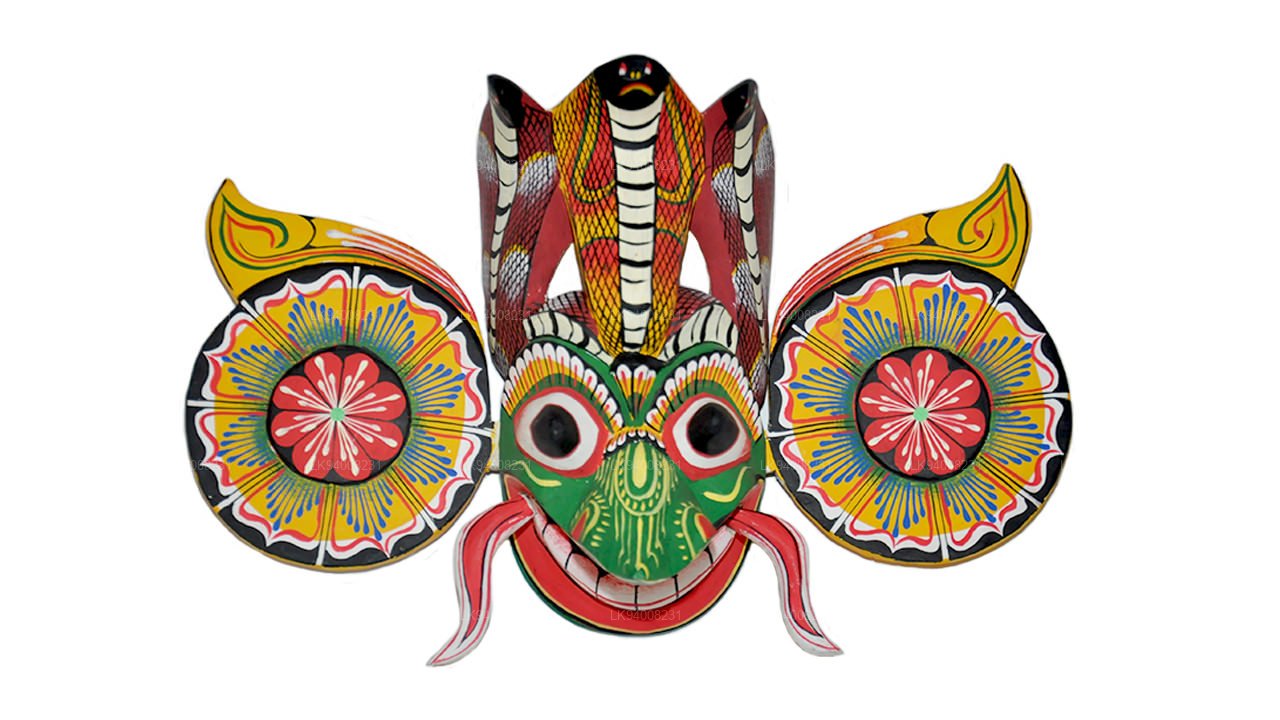
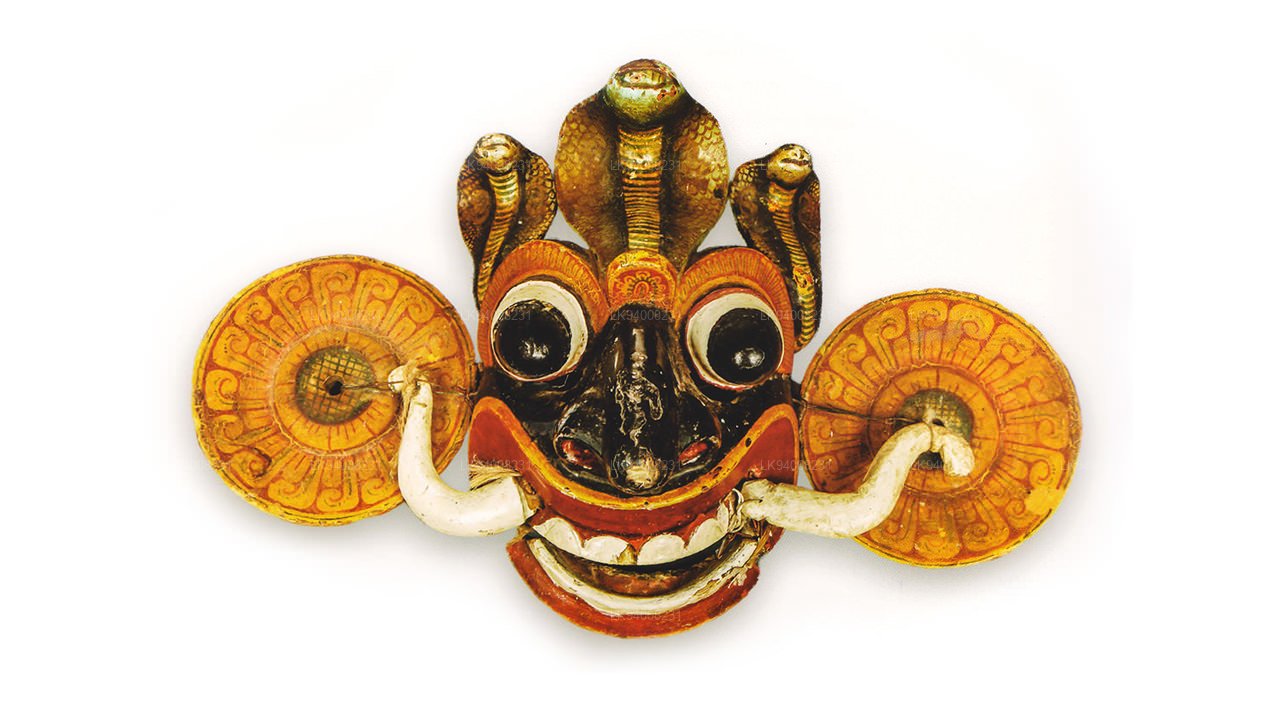
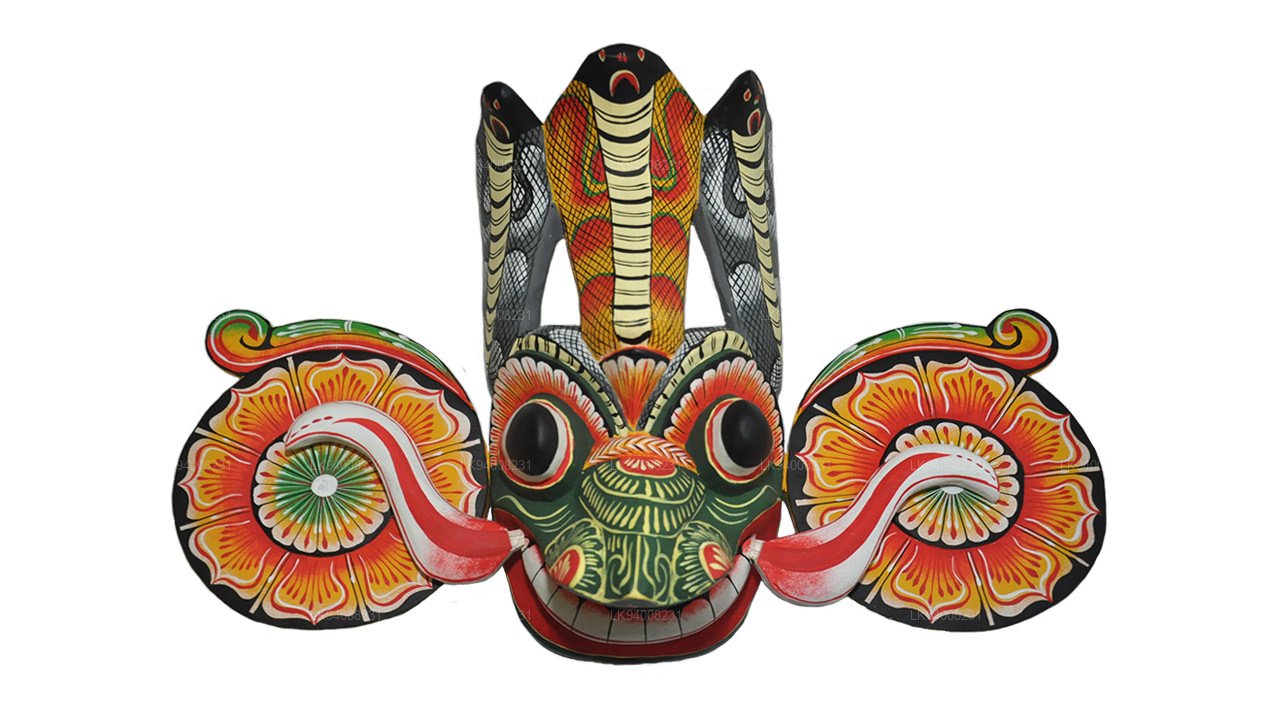
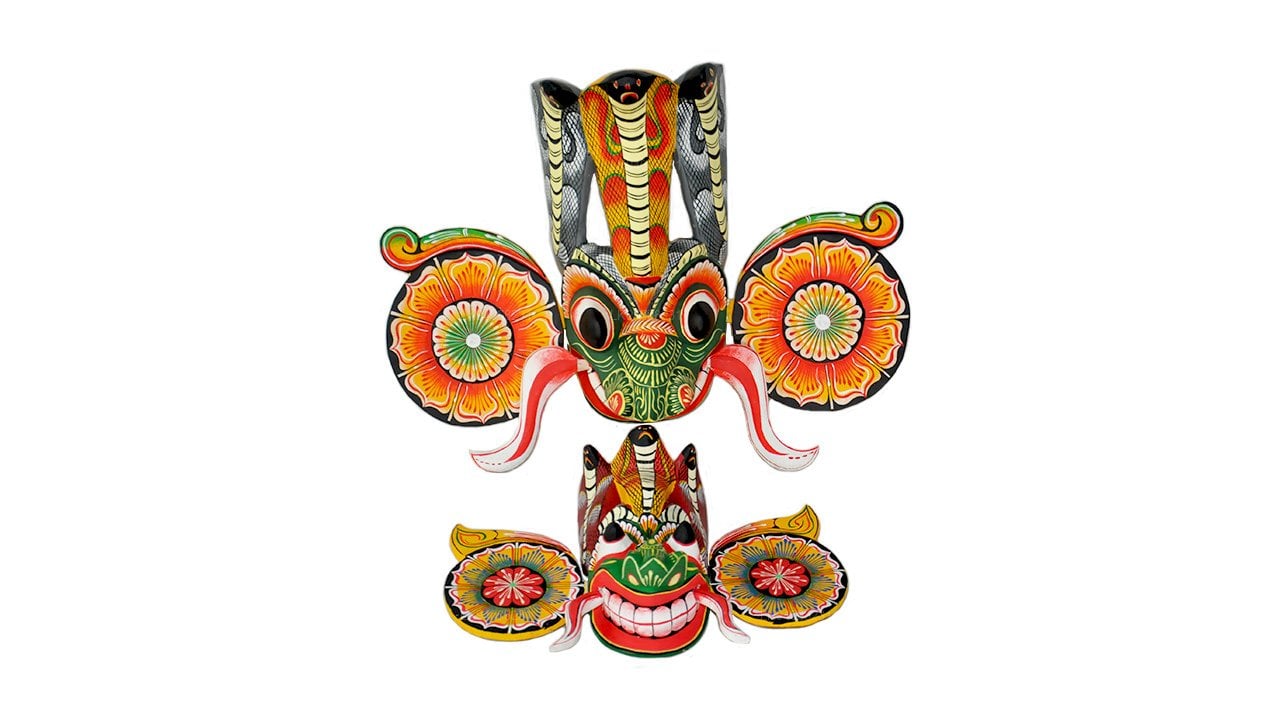
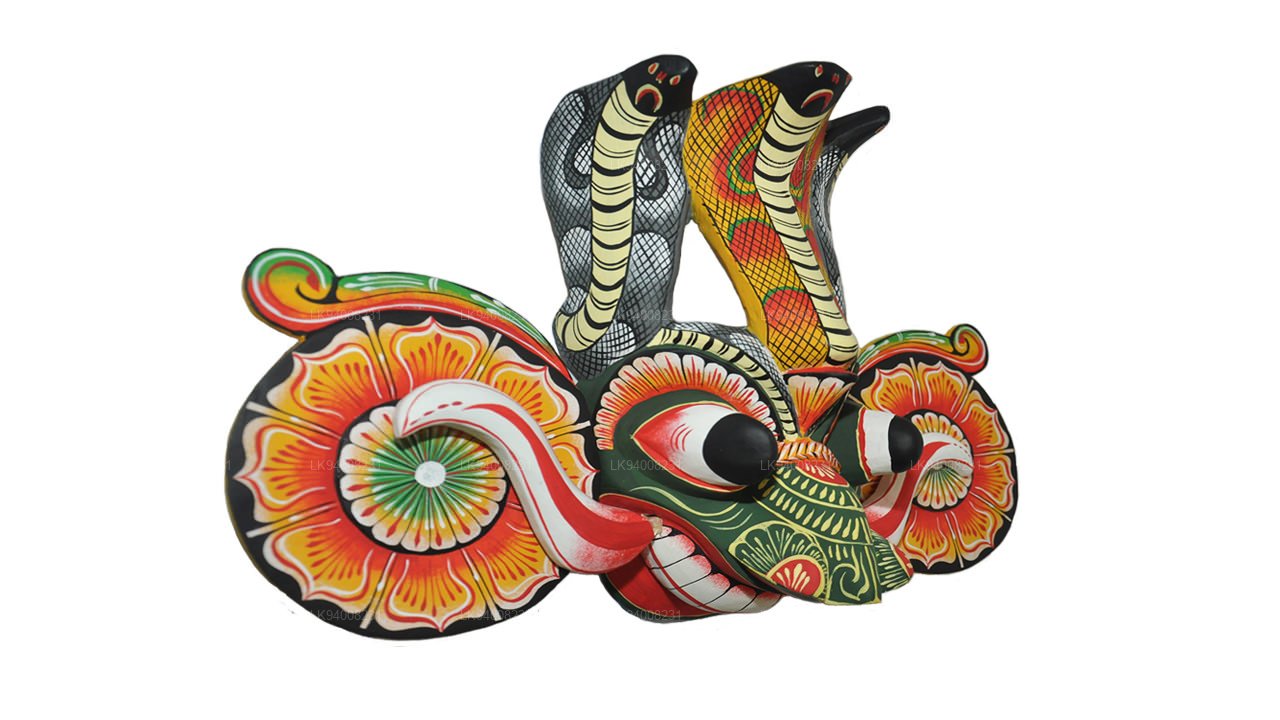
The Poornaka Raksha Mask is a striking and culturally rich artifact rooted in Sri Lanka’s long-standing tradition of ritual mask carving. Originating primarily from the coastal town of Ambalangoda, this mask is part of the broader Raksha (demon) mask category, which is deeply intertwined with folk beliefs, healing rituals, and protective symbolism. The term “Raksha” itself refers to powerful mythical beings believed to ward off evil influences, and the Poornaka Raksha Mask stands out for its distinctive features and symbolic depth.
Traditionally handcrafted from lightweight woods such as kaduru, the mask is vividly painted in bold hues—often dominated by reds, yellows, greens, and blacks. These colors are not merely decorative; they represent different energies and protective forces. The Poornaka Raksha Mask is characterized by exaggerated facial expressions, protruding eyes, and elaborate adornments, including cobra motifs and flame-like patterns. Such features are designed to intimidate malevolent spirits and create a sense of awe, reinforcing its role as a guardian figure.
Historically, masks like the Poornaka Raksha were used in thovil ceremonies—traditional Sri Lankan healing rituals performed to exorcise demons and cure illnesses believed to be caused by supernatural forces. During these performances, dancers wear the mask and enact dramatic sequences accompanied by drumming and chanting. The mask thus becomes more than an object; it transforms into a living embodiment of protective power, bridging the physical and spiritual realms.
In contemporary Sri Lanka, while the ritualistic use of masks has diminished, the Poornaka Raksha Mask continues to thrive as a symbol of cultural heritage. It is widely appreciated as a decorative art piece, often displayed in homes, hotels, and galleries. Artisans in Ambalangoda have preserved the traditional techniques while also adapting designs for modern audiences, ensuring that this ancient craft remains relevant.
Beyond its aesthetic appeal, the Poornaka Raksha Mask represents resilience and continuity. It reflects Sri Lanka’s ability to preserve its intangible cultural traditions while embracing change. Whether used in ritual, performance, or decoration, the mask remains a powerful emblem of protection, artistry, and identity within the Sri Lankan cultural landscape.